
Idol Prank Video Call & Chat
HIGAME GLOBALCasual
3.8201.00 Reviews
- Version
- 0.40
- Installs
- 10.00M
- Age Rating
- Everyone
Screenshots
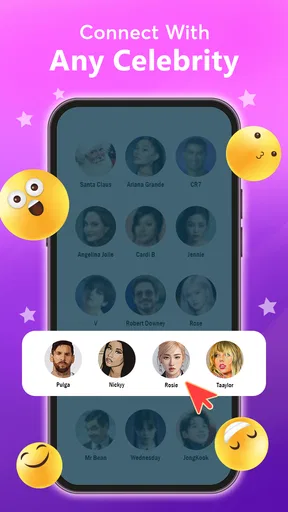

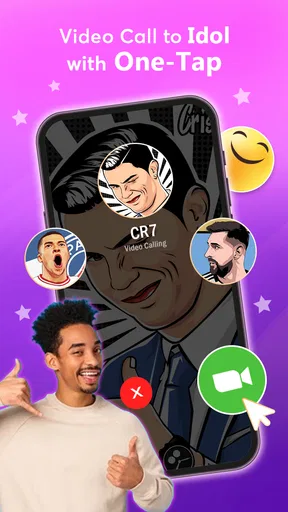
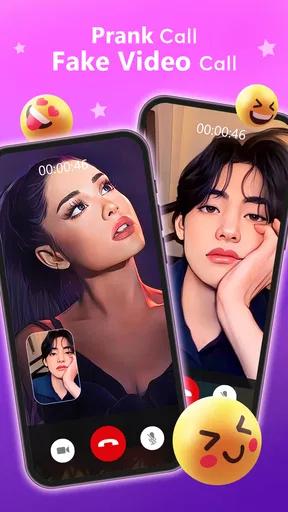
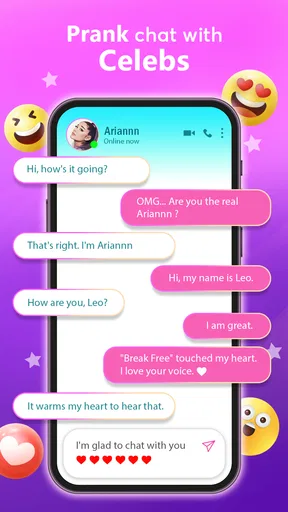
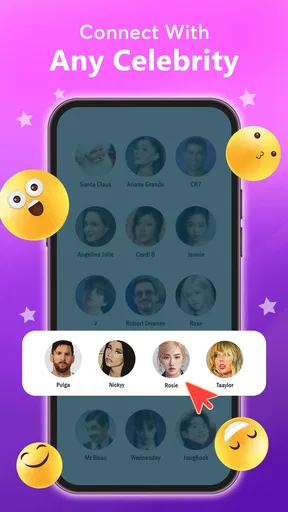
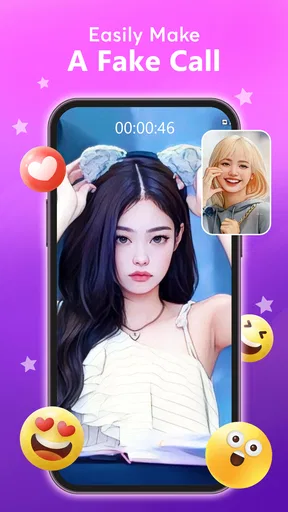
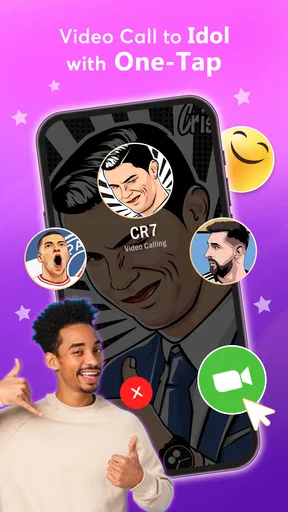
Our Review of Idol Prank Video Call & Chat
 Analysis by Appyee
I tried Idol Prank Video Call & Chat as a light social prank game rather than a serious communication tool, and that distinction matters from the first tap. Its appeal is the setup: you create the feeling of an incoming video call or chat with an idol, then use the moment as a playful surprise for yourself or someone nearby. It is built for quick reactions, jokes, and fan-style role-play, not for long sessions with complex goals.
The game comes from HIGAME GLOBAL and sits in the casual section. It is free to download, carries an Everyone age rating, and runs on devices using Android 8.0 or later. The current version is 0.40, while the game was released on January 24, 2024. Those details place it firmly in the quick-entertainment category: something I would open for a few minutes when I want a silly interaction, not something I would install as my main game.
How the current experience feels in everyday use
The central idea is easy to understand. Instead of asking me to learn rules, manage resources, or improve a character, the game focuses on the fantasy of being contacted by an idol. That makes the first use approachable, especially for younger players or anyone who enjoys celebrity-themed jokes. I did not need a long explanation to understand the intended fun: set up a convincing-looking call or conversation, then enjoy the reaction.
That simplicity is also the reason the game works best in short bursts. I can imagine opening it while sitting with a friend, choosing a prank scenario, and handing over the phone at the right moment. The entertainment comes from timing and presentation, so the person receiving the phone is almost as important as the person operating it. If the reveal happens too quickly, the joke loses its effect; if the setup is too obvious, the experience becomes less amusing.
My strongest recommendation is to treat it as a playful prop. It is closer to a digital joke built around idol fandom than to a conventional video-call application. The game does not need to replace messaging apps, video platforms, or genuine fan communities. Its value is in creating a small staged moment without requiring complicated preparation.
For a realistic everyday scenario, I would use it during a casual get-together with a friend who already enjoys idol culture. I would prepare the screen before passing over the phone, let the person respond naturally, and then explain immediately that it is a game. That last step is important. A prank should stay harmless, and pretending that a real person is contacting someone can become uncomfortable if the joke is pushed too far or used with someone who may be anxious about unexpected calls.
The best audience is looking for a quick joke
This game is a good match for players who like short, visual interactions and fan-themed humor. It may also suit parents looking for an uncomplicated casual title that does not ask a child to understand complex controls. The Everyone rating supports that broad positioning, although I would still encourage adults to supervise how the prank is used, especially when the phone is being passed around a group.
It is less suitable for someone expecting an authentic conversation with a real idol, a live community, or a deep simulation. Nothing about the premise should be confused with direct contact. The fun depends on pretend interaction, and anyone looking for real-time social connection will be happier with an ordinary messaging or video-call service.
It also may not satisfy players who need progression to stay interested. In a puzzle game, I usually have a clear challenge to solve; in a role-playing game, I expect characters and systems to develop. Here, the payoff is immediate and social. That is a strength when I want instant amusement, but a limitation when I want a reason to return every day.
What the version and release history tell me
The game arrived in early 2024 and is currently at version 0.40. I read that as a product still in a relatively early stage rather than a mature, feature-heavy platform. The version number does not by itself prove a particular update or improvement, so I would not assume that every future release will change the way the game works. What it does suggest is that the experience may continue to be refined as the developer decides which parts of the prank concept deserve more attention.
For existing users, the current version is best judged by whether the basic joke remains easy to stage. A minor version number can matter less than practical details such as how quickly the game opens, whether the chosen scenario is easy to understand, and whether the interaction feels smooth on a particular phone. I would keep the app updated through the normal store process, but I would also avoid expecting a major transformation from a version label alone.
The release timing helps explain the game’s identity. It was designed around a familiar social-media-style fantasy: the excitement of seeing an idol appear on the screen. That idea is immediately recognizable, which reduces the learning curve. At the same time, familiar ideas need variety to remain interesting. If the available situations feel too similar, the novelty can fade faster than it would in a casual game with changing puzzles or levels.
Three useful ways to get more from the prank format
First, I would plan the audience before starting. A prank that works with a close friend may be a poor choice for a younger child, a stranger, or someone who dislikes surprise calls. The game is more enjoyable when the reaction is laughter rather than confusion. Choosing a willing participant is not just a safety point; it improves the quality of the joke because the person can appreciate the setup afterward.
Second, I would use the phone’s position as part of the presentation. Holding it too close or explaining what is happening immediately gives away the trick. A natural handoff works better than an exaggerated performance. This is a small but important trade-off: the more believable the moment feels, the more carefully I need to manage the reveal.
Third, I would keep each attempt short. Repeating the same prank several times in one sitting can make the experience feel mechanical. I prefer using it once, enjoying the reaction, and then moving on to a different activity. That approach makes the game’s limited-session design feel intentional instead of disappointing.
A fourth tip is to avoid treating the screen as proof of a real relationship. The idol theme is a playful fantasy, and the game should remain clearly within that boundary. I would not use it to pressure someone into sharing personal information, answering a real call, or believing that a public figure has contacted them. The best use is transparent fun that ends with an easy explanation.
Where it differs from ordinary casual games
Compared with a match-three game, a simple runner, or a physics toy, this title depends less on individual skill. There is no obvious appeal in beating a difficult score or mastering a complicated control scheme. Instead, the player’s creativity and social timing do most of the work. That makes it easier to share with someone who does not usually play games, but it also means the experience may feel thin when I am alone.
Compared with a standard video-call app, the difference is even clearer. A real call is useful because another person is genuinely present; this game is useful because it stages the appearance of that moment. A messaging platform is the better choice for actual conversation, while an idol-focused fan platform would be a better fit for news, communities, or authentic content. Idol Prank Video Call & Chat occupies a narrower space: a quick pretend interaction for amusement.
Compared with other prank-style apps, I would choose this one specifically when the idol theme is the main attraction. If the recipient does not care about idols, the concept loses much of its impact. A more general joke app may work better for a mixed group, while a conventional casual game may offer more replay value for solo play.
What existing users may notice over time
People who installed the game near its release may find that the most important question is not whether the concept is understandable—it is—but whether the experience continues to offer enough freshness. The current rating is 3.8 from around 53 thousand ratings, and the game has passed 10 million installs. That level of reach shows that the premise has found a sizable audience, but popularity does not guarantee that every player will enjoy the same amount of replay.
I would interpret the rating as a reason to keep expectations balanced. It suggests a mixed but generally recognizable experience rather than universal enthusiasm. Some players will appreciate the instant joke, while others may judge it against fuller casual games and find the interaction too limited. The smaller pool of written feedback—around 200 reviews—also means I would pay more attention to my own first session than to a single glowing or critical comment.
For someone already using it, the practical question is whether it still creates a reaction in the people around them. If yes, the game is doing its job even without deep progression. If the same scenario has already been repeated several times, I would not force continued use. This is a title where social context can extend the life of the experience more effectively than grinding through the same action alone.
Remaining gaps and the trade-offs behind them
The biggest limitation is replayability. A prank has a natural endpoint: once the other person knows the trick, the surprise is gone. That does not make the game poor, but it places a ceiling on how often I would open it. Players expecting fresh challenges, unlockable depth, or a long-term objective should approach it cautiously.
Another limitation is its dependence on the recipient. The game cannot create a memorable reaction by itself. It needs the right person, the right moment, and a clear sense of humor. Used alone, it may feel more like looking at a staged screen than playing a complete game. That is a significant difference from casual alternatives that remain entertaining without an audience.
The idol focus can also narrow its appeal. Fans may find the theme immediately engaging, while people who are indifferent to idols may see only a basic pretend call. I would not recommend installing it for a group unless at least one person genuinely enjoys that style of fandom. The theme is not a minor decoration; it is the reason the prank has its identity.
There is also a responsibility issue that comes with any simulated call concept. Even a harmless joke can cause stress if someone thinks an urgent call is real. I would avoid using it in situations involving work, school, driving, sleep, or personal emergencies. Keeping the prank private, brief, and easy to explain protects the people involved and makes the game more enjoyable for everyone.
Device compatibility is straightforward for many users because Android 8.0 or later is supported, but that does not mean every older phone will feel identical. Performance, screen size, and touch response can affect how convincing or comfortable the setup feels. I would test it casually before planning a group prank, especially if the phone is older or has limited space for new apps.
What I would watch as the game develops
With version 0.40 as the current point of reference, I would watch for improvements that make the existing idea more flexible rather than changes that turn it into a completely different game. More varied situations, clearer ways to prepare a prank, and smoother transitions would directly improve the experience. Those are reasonable things to look for, but I would not describe them as confirmed features or promise that they are coming.
I would also pay attention to whether future updates preserve the quick-start quality. The game’s advantage is that a new player can understand the joke without studying instructions. If additional elements make the experience slower or more complicated, they could weaken the very quality that makes it accessible. In my view, any growth should support fast, friendly use instead of adding complexity for its own sake.
Another useful sign would be better support for different social situations. The current concept is most effective when the prank can be adjusted to the person receiving it. Even small improvements in choice or presentation could make repeated use less predictable. Again, that is an expectation about what would help the product, not a claim that such changes already exist.
HIGAME GLOBAL has a simple foundation to work with, but the developer needs to balance novelty with clarity. The game should remain obviously playful, particularly because simulated communication can be misunderstood outside a close group of friends. A clear, respectful design direction would matter more to me than adding flashy features that do not improve the actual joke.
My recommendation after trying it
I recommend Idol Prank Video Call & Chat to someone who wants a free, casual idol-themed gag that can be shared in a relaxed setting. It is easy to understand, quick to demonstrate, and distinctive enough to stand apart from ordinary solo casual games. The broad age rating and Android 8.0 minimum make it approachable for many users, while the large install base shows that the basic idea has reached plenty of players.
I would skip it if I wanted real communication, a serious celebrity-fan service, or a game with substantial progression. I would also skip it if my friends dislike surprise scenarios or if I expect to play alone for long periods. In those cases, a messaging app, a genuine video service, or a more traditional casual game would be a better fit.
My final view is positive but deliberately limited: this is a small social prank experience, not an all-purpose game. Its success depends on using it with the right person and keeping the joke respectful. Use it as a short, transparent bit of fun, and its simplicity becomes the main attraction rather than a weakness.
Verdict
Strengths of Idol Prank Video Call & Chat
- Fun way to simulate calls and chats with idol-style characters.
- Simple interface makes prank scenarios quick to set up.
- Useful for sharing playful moments with friends and family.
- Lightweight concept that is easy for casual users to understand.
- Offers entertainment without requiring advanced editing skills.
Limitations of Idol Prank Video Call & Chat
- Some features may be limited unless you watch ads or make purchases.
- Prank conversations can feel repetitive after several uses.
- Not a real communication tool with actual idols or celebrities.
- Privacy permissions should be checked carefully before using chat features.
- Results depend heavily on the quality and variety of available scenarios.
Other Releases by HIGAME GLOBAL
View All
BOBA DIY™: Tasty Tea Simulator
Casual4.5

Monster DIY: Mix Beats
Music4.5

Keyboard Obby: ASMR Speed Run
Casual4.6

Paint & Hide: Color Guys
Casual3.1
Similar Picks in This Category
View All
My Talking Angela
Outfit7 Limited4.2

My Talking Tom
Outfit7 Limited4.3

Pou
Zakeh4.2

My Talking Tom 2: Pet Game
Outfit7 Limited4.3

Candy Crush Saga
King4.6

Bridge Race
Supersonic Studios LTD4.1
Frequently Asked Questions
What is Idol Prank Video Call & Chat, and how does it work?
Idol Prank Video Call & Chat is an entertainment app designed to simulate video calls and conversations with idol-style characters or celebrities. After choosing a character and call scenario, the app plays a staged interaction that looks like an incoming call or chat. It is intended for fun, jokes, and sharing reactions rather than providing a genuine connection with a real idol.
Is the video call with a real celebrity or idol?
No. The calls and messages are simulated, pre-recorded, or generated within the application. They do not connect you to a real celebrity, artist, influencer, or public figure. Before downloading, users should understand that the app is primarily a prank and role-play experience. Any celebrity names, images, voices, or likenesses may be used only as part of the app’s entertainment presentation.
Does Idol Prank Video Call & Chat require an internet connection?
Some features may work after the necessary content has loaded, but an internet connection is commonly needed to download media, display advertisements, update the app, or access online features. Performance can also depend on your device and connection speed. If you plan to use the app while traveling or with mobile data, check its permissions and data usage first, especially when playing video-heavy call scenarios.
Is Idol Prank Video Call & Chat safe for children and teenagers?
The app may be suitable for casual entertainment, but parents should review its age rating, advertising, permissions, and available chat or sharing functions before allowing children to use it. Simulated conversations can sometimes include promotional content or themes that are not appropriate for every age group. Children should also be reminded not to enter personal information or share private screenshots online.
Is Idol Prank Video Call & Chat free to download and use?
The application may be available as a free download, but free access can include advertisements, optional purchases, locked characters, or premium features. Pricing and availability can vary between Android and iOS and may change after installation. Review the store listing and in-app purchase details carefully, and use purchase restrictions if the app will be installed on a child’s device.
Play our best games!


